
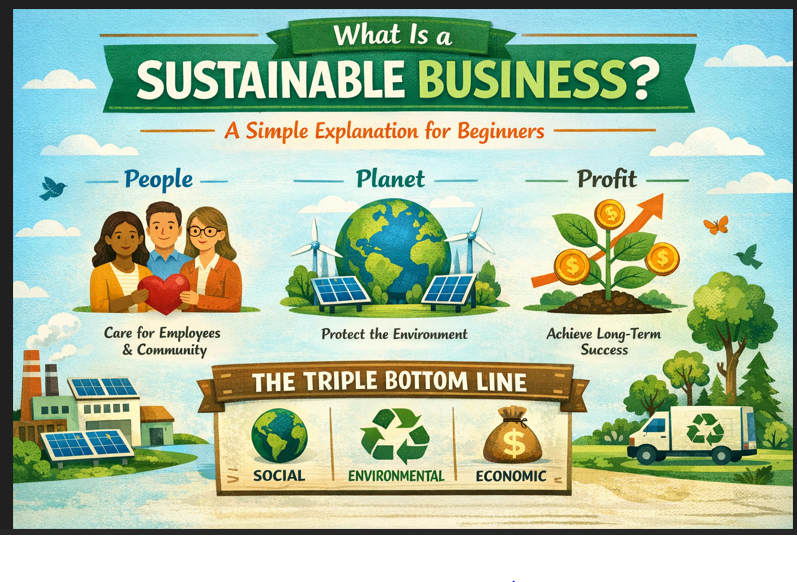
Do you want to make a difference to the impact your business has on the natural world? Learn all about sustainable business and how to sharpen up your best practices. A sustainable business operates in a way that protects and preserves the environment, contributes to the well-being of society, and achieves economic viability. This holistic approach ensures that business activities do not deplete natural resources, harm ecosystems, or negatively impact communities. Sustainable businesses strive to create long-term value by integrating environmental, social, and governance (ESG) considerations into their core strategies.
Understanding the Meaning of a Sustainable Business
A sustainable business is an enterprise that operates in a way that minimizes its negative impact on the environment, society, and the economy, while simultaneously working to create long-term value for all its stakeholders. The core concept is meeting present needs without compromising the ability of future generations to meet their own
The Three Pillars of a Sustainable Business
Environmental impact: Determining environmental impact includes measuring the resources your company uses each year. That includes energy use, of course, as well as water consumption, carbon emissions, etc. In addition, you need to determine how much waste your company produces and break it down into daily, weekly, monthly, and yearly amounts. Progress in achieving sustainability can be measured by the reduction in negative environmental effects. Companies should develop clear environmental policies that guide their efforts to reduce current negative environmental impacts and prevent further damage. Better yet, the policies should improve the environment in addition to mitigating harm.
Social impact: Your company’s social impact involves the work environment, the products and services you offer, and your employees’ health and safety. Other factors may include your company’s inclusivity and equitable pay. Does your company offer a healthy culture that values all employees? Your business should also be measured against community employment standards.
Measuring social impact requires multiple approaches. You may compile product recall numbers, consumer complaints, average employee sick days, health and safety records, and employee retention numbers as part of your analysis.
Economic impact: Traditional methods of measuring economic success can be used to determine profitability, but they should be supplemented by an analysis of community financial impact. Did the company help raise the local standards of living? Have ESG efforts improved the environment and the immediate and global community? A corporate code of ethics can guide the board’s efforts in this area and streamline sustainability implementation.
What Makes a Business Truly Sustainable?
A truly sustainable business balances profit (Economic), planet (Environmental), and people (Social), creating long-term value by regenerating resources, minimizing harm (waste, pollution), ensuring fair labor/governance, and driving steady growth that benefits stakeholders, not just shareholders, through transparent, circular models and continuous improvement.
Why Is Sustainable Business Important?
Integrating sustainability practices into an organization’s strategy won’t just reduce the organization’s negative impact on the environment and society; it can also create opportunities to positively impact nature and society.
Global companies have a tremendous amount of influence. Their actions can affect consumption patterns and production practices, wielding a substantial amount of economic and political influence.
This influence can be used to squeeze maximum profits out of a resource at the expense of the planet and its inhabitants. Fortunately, it can also be used to help protect resources when those companies make a conscious decision to put people over profits.
There are many seemingly small practices that can be implemented within companies that can have a large impact on sustainability.
Going paperless when possible, recycling and reducing waste, and ensuring that the vendors your organization does business with are utilizing sustainable practices can boost sustainability within your company.
Businesses that cling to older, outdated, and potentially harmful practices driven by profit alone may fall behind those that offer the kind of clean, responsible practices that consumers and clients increasingly seek out.
Incorporating the needs of its people and places into the long-term success of the business and its prosperity can actually increase profits, as well as the business’s standing in the community, all of which increase the business’s chances for long-term viability.
Sustainable Business vs Traditional Business
Business practices play a crucial role in shaping the economic, environmental, and social landscape of our society. Traditional business practices have long been focused on short-term profitability and financial gains, often neglecting the broader impacts on the environment and society
From economic perspective traditional business practices prioritize immediate profit maximization and often overlook the long-term implications. On the other hand, sustainable business practices recognize the value of long-term thinking and take a holistic approach by considering the triple bottom line – people, planet, and profit. Sustainable practices have been shown to generate economic benefits through cost savings achieved via resource efficiency, waste reduction, and energy conservation. Moreover, sustainable businesses enjoy enhanced brand reputation and customer loyalty, providing access to new markets and emerging opportunities
In the case of environmental impact traditional business practices tend to be resource intensive, resulting in excessive consumption, waste generation, and pollution. Sustainable business practices, however, embrace the concept of environmental stewardship. They prioritize resource conservation, employ eco-friendly technologies, and actively seek to reduce their carbon footprint. Sustainable practices integrate renewable energy sources, implement sustainable supply chain management, and adopt eco-design principles that consider the entire lifecycle of products. By doing so, they mitigate environmental impacts and contribute to the preservation of natural resources and biodiversity
Examples of Sustainable Businesses
Organisation is not the same, which means that their sustainable best practices are likely to differ as well. While sustainability measures are unique to each business, there are some sustainable business practices that are used more often than not. They include:
Using sustainable materials during manufacturing
Improving energy management efficiency
Reducing greenhouse gas emissions across operations
Creating efficient supply chains
Enabling sustainable development
Giving to sustainable charities or sponsoring education funds.
Can Small Businesses Be Sustainable?
Common Misconceptions About Sustainable Business
Despite growing awareness, several myths about sustainable business persist. One common belief is that sustainability is only relevant for large corporations. In reality, small and medium-sized businesses often have more agility and can implement changes more quickly. Many impactful innovations are coming from startups and local businesses that are embedding sustainability from day one.
Another misconception is that sustainability is only about environmental issues. While environmental impact is a key factor, social and economic responsibility are just as critical. Issues like fair wages, diversity, and ethical leadership are central to a sustainable business model.
Finally, there’s the assumption that sustainability is too expensive. While some changes may require upfront investment, the long-term returns in the form of cost savings, risk reduction, and increased brand value often outweigh the initial costs. In fact, sustainability can be one of the most financially sound strategies a company can pursue.
The Role of Innovation in Sustainable Business.
Innovation can provide numerous benefits to businesses of all sizes, including:
Competitive Advantage: Innovation helps businesses stay ahead of the curve by making new or unique products, services, or solutions. This gives them a competitive advantage over other businesses that are slower to innovate or do not prioritize innovation.
Increased Efficiency and Productivity: New processes and technologies can help businesses streamline their operations and make them more productive. This can help save money and make the business more money.
Higher Profitability: Innovation can lead to the creation of new products or services that generate additional revenue streams. It can also lead to cost savings, which can increase profit margins.
Improved Customer Satisfaction and Loyalty: Innovation can help businesses learn more about their customers’ needs and meet them better. This can lead to happier and more loyal customers.
The Future of Sustainable Business
The business landscape is constantly evolving and sustainability is a rapidly growing area of importance. In recent years, companies have begun to realise that being environmentally responsible is not only a moral obligation, but also a key factor in their success. As a result, many companies are now making significant investments in sustainability, with the goal of becoming more environmentally friendly and economically viable
Increased focus on carbon footprints: The growing concern about climate change is leading companies to pay closer attention to their carbon footprints. This means that companies are now looking for ways to reduce their greenhouse gas emissions, through initiatives such as energy efficiency, renewable energy, and sustainable transportation.
More collaboration: Companies are recognising that sustainability is a collective effort and are increasingly collaborating with each other, as well as with governments and non-profits, to tackle environmental issues. This collaboration can take many forms, including partnerships, joint ventures, and the creation of industry-wide initiatives.
Greater transparency: Companies are becoming more transparent about their sustainability efforts, and are now disclosing more information about their environmental impact through sustainability reports and other means. This transparency allows consumers, investors, and other stakeholders to assess the sustainability of a company and make informed decisions.
Conclusion
Sustainable business simply put, it is a business that succeeds financially while respecting people and the planet. It focuses on long-term value rather than short-term gains and recognizes that business success and sustainability go hand in hand.
For beginners, sustainability may seem complex at first, but its core idea is simple: do businessresponsibly, ethically, and with the future in mind. Whether you are a student, entrepreneur, or curious learner, understanding sustainable business is an essential step toward building a better and more resilient world